

Billy's New Mexico, 1878
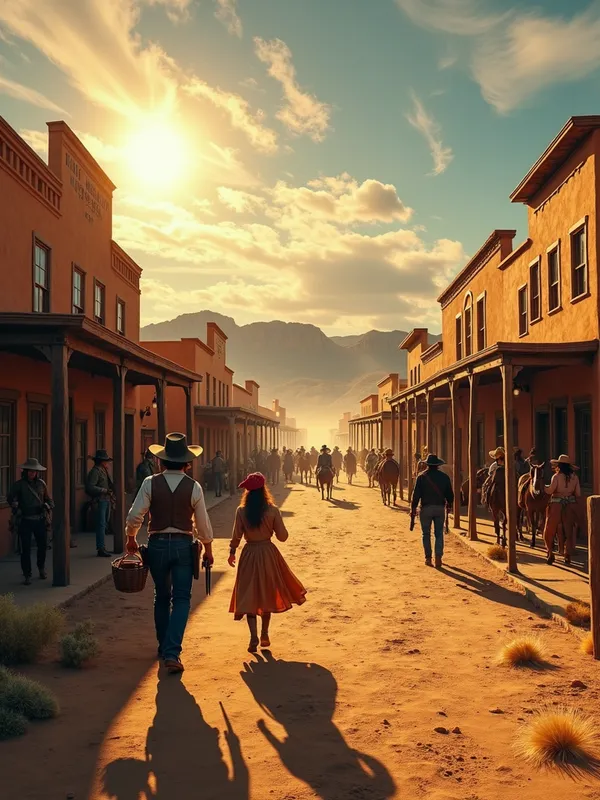
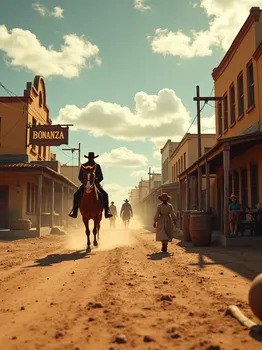
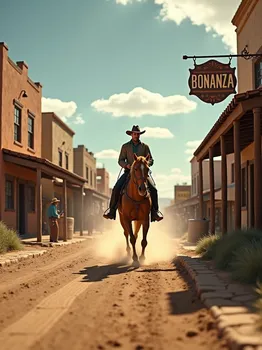
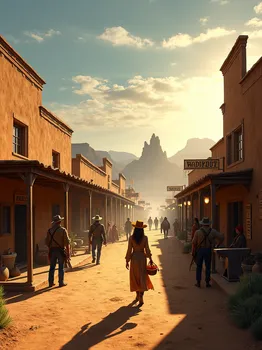
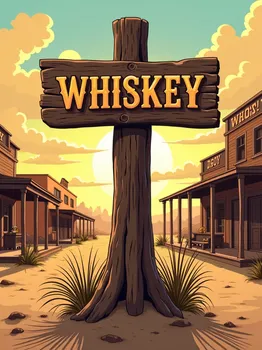
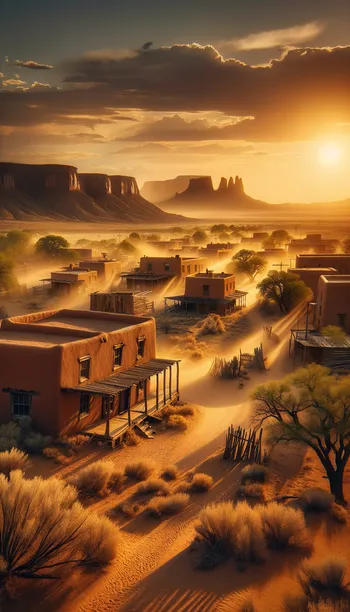
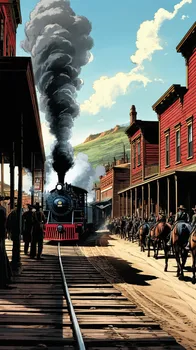
A gritty, historically accurate portrayal of a New Mexico frontier town circa 1878, inspired by Billy the Kid’s era. The scene unfolds at golden hour, with long shadows stretching across a dusty main street lined with adobe buildings and wooden false-front structures. Sunlight glows amber on weathered clapboard saloons bearing faded signs like “The Lone Star” and “Cantina de Santa Fe.” A blacksmith hammers at an anvil near a corral of sweat-glazed horses, sparks flying, while Mexican vaqueros in wide-brimmed sombreros and Anglo cowboys in Stetson hats, bandanas, and denim jeans trade goods outside a mercantile. In the foreground, a young woman in a faded calico dress and sunbonnet carries a basket of chili ristras past a wooden water trough, her skirt brushing against a stray tumbleweed. Nearby, an Apache trader in a buckskin tunic and turquoise jewelry displays handcrafted pottery to a group of settlers. The air is hazy with kicked-up dust, illuminated by shafts of light filtering through split-rail fences and hitching posts. Architectural details include vigas (exposed roof beams), ocotillo cactus fences, and iron-ringed doors. A saloon’s batwing doors swing open, revealing a dim interior with a tin-hooded fireplace and a poker game under a kerosene lamp. On the sheriff’s office wall, a weathered wanted poster for “William H. Bonney” flutters in the breeze, reward text barely legible. The backdrop features the ochre mesas of the Southwest, dotted with sagebrush and juniper, under a vast sky streaked with cirrus clouds.Textures: Rough adobe walls, sun-bleached wood grain, glinting spur rowels, and the soft weave of wool serapes. Mood: Tense yet vibrant, blending the harshness of frontier life with fleeting moments of community. Cinematic depth via chiaroscuro lighting, emphasizing the interplay of shadow and sunset. No anachronisms—strict 1870s authenticity in tools, clothing (button-up boots, suspenders, bolo ties), and horse tack.