



Interdisciplinary Engineering Curriculum - AI Generated Image with Art

Interdisciplinary Engineering Curriculum - Triangular Model:

Vertices:

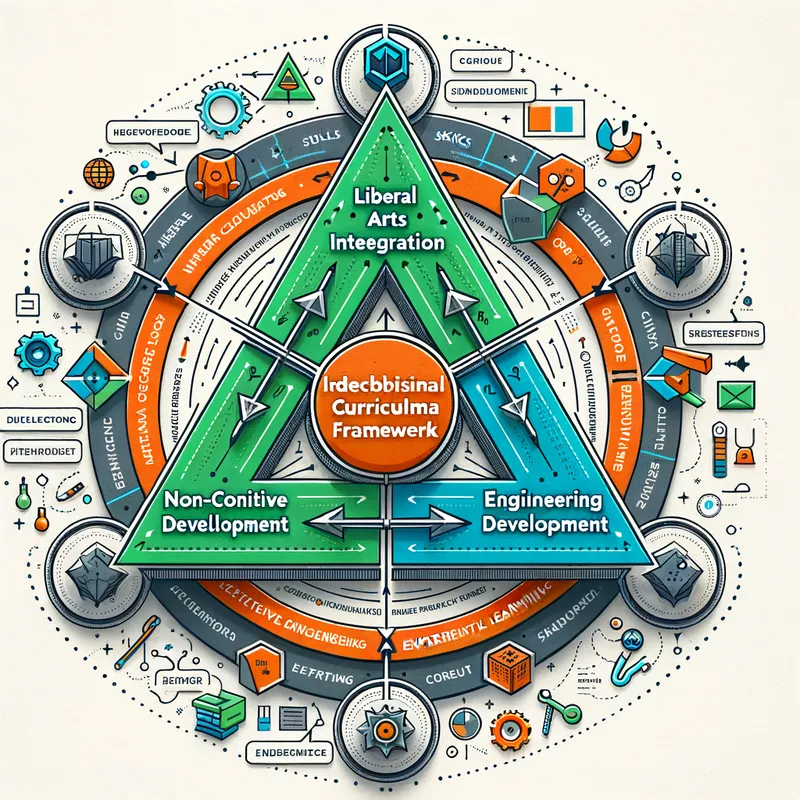
Liberal Arts Integration (Green): Represents the inclusion of ethics, cultural awareness, communication skills, and creative problem-solving courses into the curriculum.

Non-Cognitive Skills Development (Orange): Focuses on traits such as openness, conscientiousness, agreeableness, emotional stability, and extraversion.

Engineering Technical Core (Blue): Ensures foundational civil engineering principles, technical expertise, and industry alignment.

Annotations: Each vertex connects to the central circle with solid arrows, emphasizing the interconnectedness of these domains.

Central Circle:

"Interdisciplinary Curriculum Framework": The core concept uniting the three main components.

Annotations: Represents a cohesive curriculum model that harmonizes liberal arts, technical education, and non-cognitive skill development.

Surrounding Elements:

Stakeholder Feedback: Positioned to the top-left of the triangle, linked to the central circle with dotted lines. Represents input from educators, industry professionals, and accreditation bodies.

Experiential Learning: Located to the top-right of the triangle. Includes internships, community projects, and interdisciplinary workshops to reinforce practical skills.

Assessment Metrics: At the bottom of the triangle, connected with dotted lines. Focuses on tools and methods to evaluate both cognitive and non-cognitive competencies.

Connections:

Solid Arrows: Between the vertices and the central circle to signify the direct contributions of each domain to the interdisciplinary framework.

Dotted Lines: Between the surrounding elements and the central circle to depict external influences and continuous feedback loops.

Color-Coding:

Green: Liberal Arts Integration.

Orange: Non-Cognitive Skills Development.

Blue: Engineering Technical Core.

Gray (Dotted Lines): External support and feedback elements.

Additional Features:

Labels and Captions: Clearly identify each component for easy understanding.

Annotations for Interdependencies: Brief explanations along the arrows and dotted lines to describe how each element supports or influences the framework. - AI image generated with Art

Interdisciplinary Engineering Curriculum

Triangular Model: Vertices: Liberal Arts Integration (Green): Represents the inclusion of ethics, cultural awareness, communication skills, and creative problem-solving courses into the curriculum. Non-Cognitive Skills Development (Orange): Focuses on traits such as openness, conscientiousness, agreeableness, emotional stability, and extraversion. Engineering Technical Core (Blue): Ensures foundational civil engineering principles, technical expertise, and industry alignment. Annotations: Each vertex connects to the central circle with solid arrows, emphasizing the interconnectedness of these domains. Central Circle: "Interdisciplinary Curriculum Framework": The core concept uniting the three main components. Annotations: Represents a cohesive curriculum model that harmonizes liberal arts, technical education, and non-cognitive skill development. Surrounding Elements: Stakeholder Feedback: Positioned to the top-left of the triangle, linked to the central circle with dotted lines. Represents input from educators, industry professionals, and accreditation bodies. Experiential Learning: Located to the top-right of the triangle. Includes internships, community projects, and interdisciplinary workshops to reinforce practical skills. Assessment Metrics: At the bottom of the triangle, connected with dotted lines. Focuses on tools and methods to evaluate both cognitive and non-cognitive competencies. Connections: Solid Arrows: Between the vertices and the central circle to signify the direct contributions of each domain to the interdisciplinary framework. Dotted Lines: Between the surrounding elements and the central circle to depict external influences and continuous feedback loops. Color-Coding: Green: Liberal Arts Integration. Orange: Non-Cognitive Skills Development. Blue: Engineering Technical Core. Gray (Dotted Lines): External support and feedback elements. Additional Features: Labels and Captions: Clearly identify each component for easy understanding. Annotations for Interdependencies: Brief explanations along the arrows and dotted lines to describe how each element supports or influences the framework.

Art, Size: 1024 x 1024
 49 Likes
 354 Views
⭐⭐⭐⭐⭐

Fantastic client support!

Even before I paid a dime, I received immediate responses to all my emails! I never hear back from big corporations, if you don't count the robotic emails, that is. Tangra's team has been super responsive, helpful, and actually human. :)

Similar AI-Generated Images

Discover more images created with similar styles, themes, and AI models


Frequently Asked Questions

Can I use the AI-generated images commercially?

Yes. All images created with Tangra AI are copyright-free and fully approved for commercial use, with no attribution required.

What AI models are used to create these images?

Tangra AI uses a curated mix of the best-performing industry models like Flux, DALL·E, Imagen, Nano Banana, and Stable Diffusion alongside our own proprietary models to deliver consistently high-quality, production-ready images.

Can I edit the images after they are generated?

Yes. Tangra AI includes powerful editing tools that let you refine and adjust your images after they're generated.