Modular Design: CARS could be designed a - AI Generated Image with Art

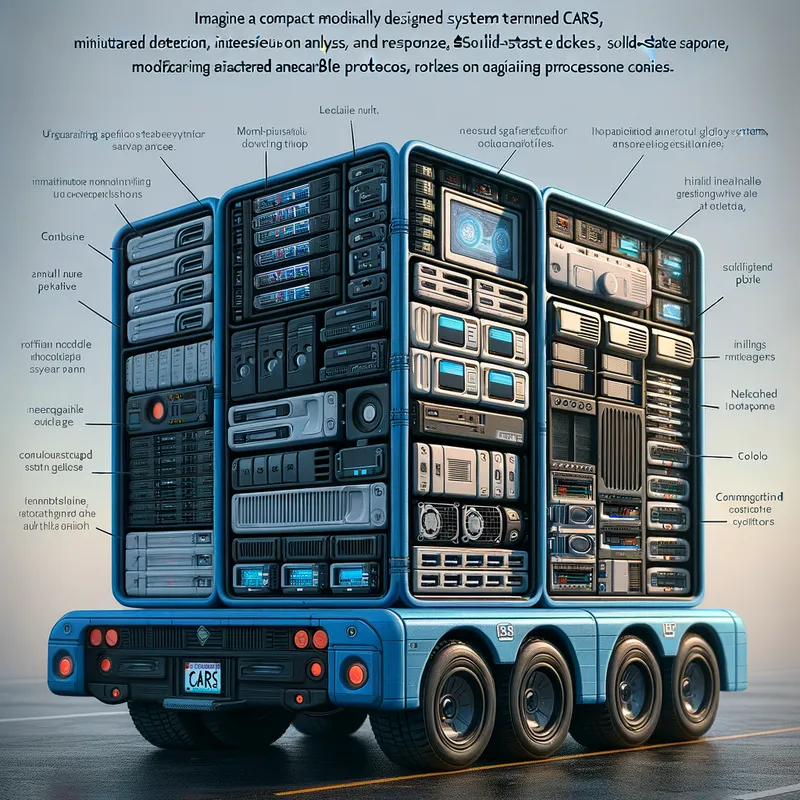
Modular Design: CARS could be designed a - Modular Design: CARS could be designed as a series of modular units, each with a specific function (e.g., threat detection, analysis, response). These modules would be much smaller than traditional server racks and could be stackable or even wall-mountable to save space.

Compact Computing: The computing hardware would utilize the latest in miniaturized processors and solid-state storage, similar to what is found in high-end laptops or compact workstations. This would significantly reduce the size of the system while still providing the necessary processing power.

Integrated Monitoring: Instead of large external monitors, CARS could have a built-in touchscreen display on one of the modules for real-time monitoring and control. This display would be sleek and could retract or fold away when not in use.

Wireless Connectivity: To reduce clutter and the need for space, CARS would communicate wirelessly with other devices and systems, using the latest in secure wireless protocols.

Energy Efficiency: The compact design would also focus on energy efficiency, with low-power components and possibly even built-in renewable energy sources like small solar panels or thermoelectric generators if applicable.

Secure Enclosure: The smaller form factor would still maintain a secure enclosure, but it could be designed with a more minimalist approach, using biometric locks or encrypted access codes for security.

Portability: For some applications, CARS could be designed to be portable, with a handle for easy transport, allowing it to be deployed in various locations or used in temporary setups.

Aesthetic Appeal: The compact CARS would have a modern and aesthetically pleasing design, with a focus on clean lines and possibly even customizable colors or lighting to fit into different environments. - AI image generated with Art

More like this

Modular Design: CARS could be designed a

Modular Design: CARS could be designed as a series of modular units, each with a specific function (e.g., threat detection, analysis, response). These modules would be much smaller than traditional server racks and could be stackable or even wall-mountable to save space. Compact Computing: The computing hardware would utilize the latest in miniaturized processors and solid-state storage, similar to what is found in high-end laptops or compact workstations. This would significantly reduce the size of the system while still providing the necessary processing power. Integrated Monitoring: Instead of large external monitors, CARS could have a built-in touchscreen display on one of the modules for real-time monitoring and control. This display would be sleek and could retract or fold away when not in use. Wireless Connectivity: To reduce clutter and the need for space, CARS would communicate wirelessly with other devices and systems, using the latest in secure wireless protocols. Energy Efficiency: The compact design would also focus on energy efficiency, with low-power components and possibly even built-in renewable energy sources like small solar panels or thermoelectric generators if applicable. Secure Enclosure: The smaller form factor would still maintain a secure enclosure, but it could be designed with a more minimalist approach, using biometric locks or encrypted access codes for security. Portability: For some applications, CARS could be designed to be portable, with a handle for easy transport, allowing it to be deployed in various locations or used in temporary setups. Aesthetic Appeal: The compact CARS would have a modern and aesthetically pleasing design, with a focus on clean lines and possibly even customizable colors or lighting to fit into different environments.

Art, Size: 1024 x 1024
 115 Likes
 238 Views

Make your own version

Start from this image's prompt and change anything you like.

Art
⭐⭐⭐⭐⭐
“Thank you for creating this platform, which allows me to see my ideas come to life. It has helped me so much.”
— Rhett

Frequently Asked Questions

Can I use the AI-generated images commercially?

Yes. All images created with Tangra AI are copyright-free and fully approved for commercial use, with no attribution required.

What AI models are used to create these images?

Tangra AI uses a curated mix of the best-performing industry models, alongside our own proprietary models to deliver consistently high-quality, production-ready images.

Can I edit the images after they are generated?

Yes. Tangra AI includes powerful editing tools that let you refine and adjust your images after they're generated.

Can I generate images in a specific brand style?

Yes. You can guide the AI with brand logos, reference images, brand colors and visual aesthetics to produce images that align with a brand's identity.

Can I generate images in different styles and formats?

Absolutely. Tangra AI supports a wide range of styles, from realistic to futuristic, and you can choose from various formats to suit your needs.

Can I generate images in different resolutions?

Yes. Tangra AI allows you to generate images in various resolutions, including high-resolution options suitable for print and digital media.

Do I need design experience to create professional-quality images?

No. Tangra AI is designed for marketers, entrepreneurs, and business users. Simply describe what you want, and the AI generates professional-quality visuals from your instructions.

Are there any restrictions on the types of images I can generate?

Tangra AI has guidelines to ensure responsible use. You cannot generate content that is illegal, harmful, or violates the rights of others.