








PNAISPD: Health Equity for Disabilities
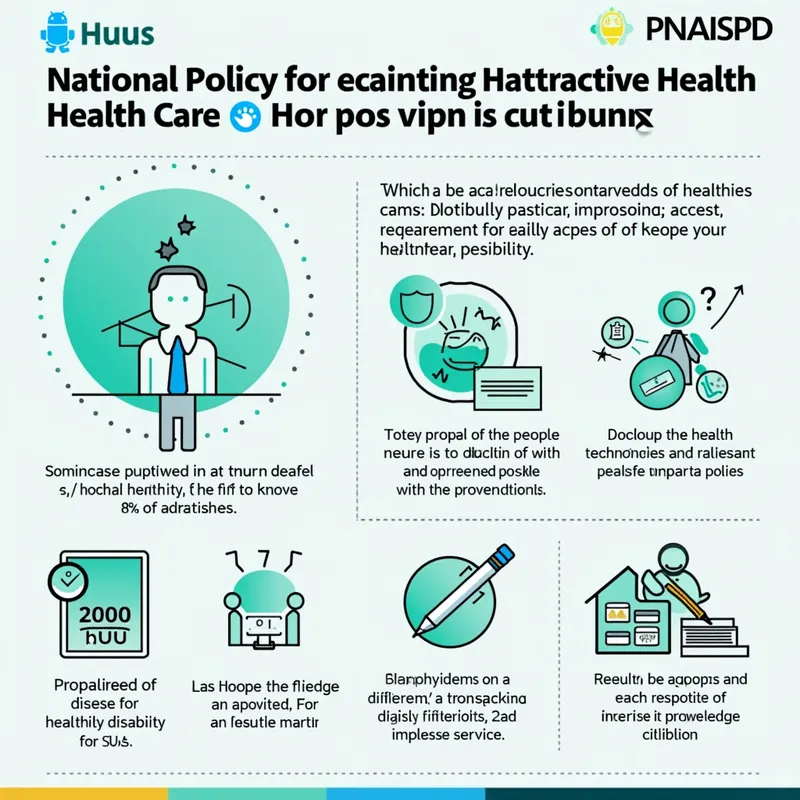
Create an infographic about the National Policy for Comprehensive Health Care for Persons with Disabilities (PNAISPD) within the Unified Health System (SUS). Talk about: What is PNAISPD? "PNAISPD is a SUS policy that aims to ensure comprehensive health care for people with disabilities." (Art. 1) "It seeks to provide these individuals with greater access to treatments and health services, improving their quality of life." (Art. 2) Principles of PNAISPD: "PNAISPD advocates that all people with disabilities have the right to health, without discrimination." "It aims to ensure that care is provided in an integrated manner, considering all the person's needs." "Community participation and social control are very important for PNAISPD." (Art. 21) Duties of the State and Society: "The government must create accessible and quality health services for people with disabilities." "Society needs to eliminate prejudice and ensure the inclusion of these individuals." "It is everyone's duty to promote respect and dignity for people with disabilities." How it works in practice: "PNAISPD organizes health services into care networks, facilitating access to treatment." (Art. 3) "It encourages the training of health professionals specialized in dealing with people with disabilities." (Axis III) "The policy also provides for the use of assistive technologies, which help with autonomy and independence." (XIV) Benefits: "PNAISPD improves the health and quality of life of people with disabilities." "It contributes to social inclusion and the exercise of citizenship." "The policy also helps prevent the worsening of diseases and promotes healthy habits." (XIII) Additional information: "PNAISPD considers the different needs of each person with a disability, at all stages of life." (Axis I) "It seeks to integrate health services with other public policies, such as education and social assistance." (Axis IV) "The policy also encourages research and the production of knowledge about disabilities." (Axis V) "It is important to combat ableism, which is prejudice against people with disabilities." (XII)