Freshwater Food Web - AI Generated Image with Art

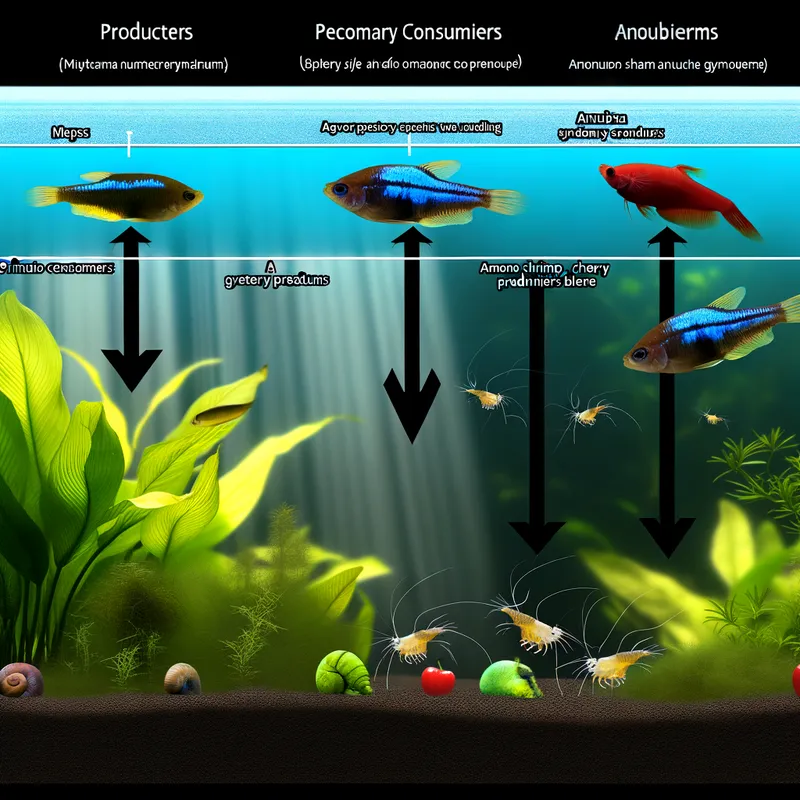
Freshwater Food Web - Title: Freshwater Aquarium Food Chain

Layout:
	•	Background: A realistic freshwater aquarium scene with natural lighting. The substrate is visible, showing fine gravel and bits of decomposing plant material, hinting at a bustling microbial world.
	•	Foreground Layers: Arranged in clearly defined horizontal tiers from bottom to top, each labeled with its role in the ecosystem.

Layer 1: Producers (Angiosperms)
	•	Visuals: Lush, vibrant aquarium plants such as Amazon Sword and Anubias, depicted at the bottom of the image.
	•	Label: “Producers (Angiosperms)”
	•	Note: Emphasize that there are no gymnosperms present.

Layer 2: Primary Consumers
	•	Components:
	•	Mystery Snails – Shown nibbling on algae and decaying plant matter.
	•	Amano Shrimp & Cherry Shrimp – Depicted actively cleaning surfaces and feeding on biofilm.
	•	Corydoras – Illustrated as bottom-dwelling fish scavenging for leftover food.
	•	Label: “Primary Consumers”
	•	Arrows: Draw arrows upward from the plants to these creatures, indicating they derive nutrients from the producers.

Layer 3: Secondary Consumers (Regular Predators)
	•	Component:
	•	Neon Tetras – Displayed in a small school, gently preying on micro-invertebrates or smaller particles.
	•	Label: “Secondary Consumers”
	•	Arrows: Connect the primary consumers to the neon tetras.

Layer 4: Apex Predators
	•	Component:
	•	Two Female Betta Fish – Positioned at the top of the diagram, depicted as the dominant figures.
	•	Label: “Apex Predators”
	•	Arrows: Indicate that the bettas are at the top of the food chain with arrows coming down from them to the neon tetras and other smaller organisms.

Additional Element:
	•	Decomposers (Bacteria & Fungi):
	•	Visuals: Represented subtly near the substrate with a creative touch (perhaps with a faint glow or abstract microscopic imagery) to indicate their role in breaking down waste and recycling nutrients.
	•	Label: “Decomposers (Bacteria & Fungi)”
	•	Arrows: Small arrows from decomposers back to the plants to illustrate the nutrient cycle.

Artistic Style:
	•	A blend of scientific clarity with an artistic, vibrant underwater scene.
	•	Clear, legible labels and arrows that neatly illustrate the food chain.
	•	Realistic depictions of each species with accurate colors and textures.
	•	The overall image should be balanced, with each tier easily distinguishable and the relationships between organisms visually clear.

Make this into a highly detailed food chain image - AI image generated with Art

Freshwater Food Web

Title: Freshwater Aquarium Food Chain Layout: • Background: A realistic freshwater aquarium scene with natural lighting. The substrate is visible, showing fine gravel and bits of decomposing plant material, hinting at a bustling microbial world. • Foreground Layers: Arranged in clearly defined horizontal tiers from bottom to top, each labeled with its role in the ecosystem. Layer 1: Producers (Angiosperms) • Visuals: Lush, vibrant aquarium plants such as Amazon Sword and Anubias, depicted at the bottom of the image. • Label: “Producers (Angiosperms)” • Note: Emphasize that there are no gymnosperms present. Layer 2: Primary Consumers • Components: • Mystery Snails – Shown nibbling on algae and decaying plant matter. • Amano Shrimp & Cherry Shrimp – Depicted actively cleaning surfaces and feeding on biofilm. • Corydoras – Illustrated as bottom-dwelling fish scavenging for leftover food. • Label: “Primary Consumers” • Arrows: Draw arrows upward from the plants to these creatures, indicating they derive nutrients from the producers. Layer 3: Secondary Consumers (Regular Predators) • Component: • Neon Tetras – Displayed in a small school, gently preying on micro-invertebrates or smaller particles. • Label: “Secondary Consumers” • Arrows: Connect the primary consumers to the neon tetras. Layer 4: Apex Predators • Component: • Two Female Betta Fish – Positioned at the top of the diagram, depicted as the dominant figures. • Label: “Apex Predators” • Arrows: Indicate that the bettas are at the top of the food chain with arrows coming down from them to the neon tetras and other smaller organisms. Additional Element: • Decomposers (Bacteria & Fungi): • Visuals: Represented subtly near the substrate with a creative touch (perhaps with a faint glow or abstract microscopic imagery) to indicate their role in breaking down waste and recycling nutrients. • Label: “Decomposers (Bacteria & Fungi)” • Arrows: Small arrows from decomposers back to the plants to illustrate the nutrient cycle. Artistic Style: • A blend of scientific clarity with an artistic, vibrant underwater scene. • Clear, legible labels and arrows that neatly illustrate the food chain. • Realistic depictions of each species with accurate colors and textures. • The overall image should be balanced, with each tier easily distinguishable and the relationships between organisms visually clear. Make this into a highly detailed food chain image

Art, Size: 1024 x 1024
 1 Likes
 68 Views
⭐⭐⭐⭐⭐
I had the opportunity to explore the excellent Tangra AI image generator. Among the many image generators I've encountered, this one stands out as one of the best. The quality and creativity it offers are truly impressive. As someone deeply interested in this field, I can't wait to see how it evolves and becomes accessible to a wider audience. Thank you for developing such a remarkable tool!

Similar AI-Generated Images

Discover more images created with similar styles, themes, and AI models


Frequently Asked Questions

Can I use the AI-generated images commercially?

Yes. All images created with Tangra AI are copyright-free and fully approved for commercial use, with no attribution required.

What AI models are used to create these images?

Tangra AI uses a curated mix of the best-performing industry models like Flux, DALL·E, Imagen, Nano Banana, and Stable Diffusion alongside our own proprietary models to deliver consistently high-quality, production-ready images.

Can I edit the images after they are generated?

Yes. Tangra AI includes powerful editing tools that let you refine and adjust your images after they're generated.