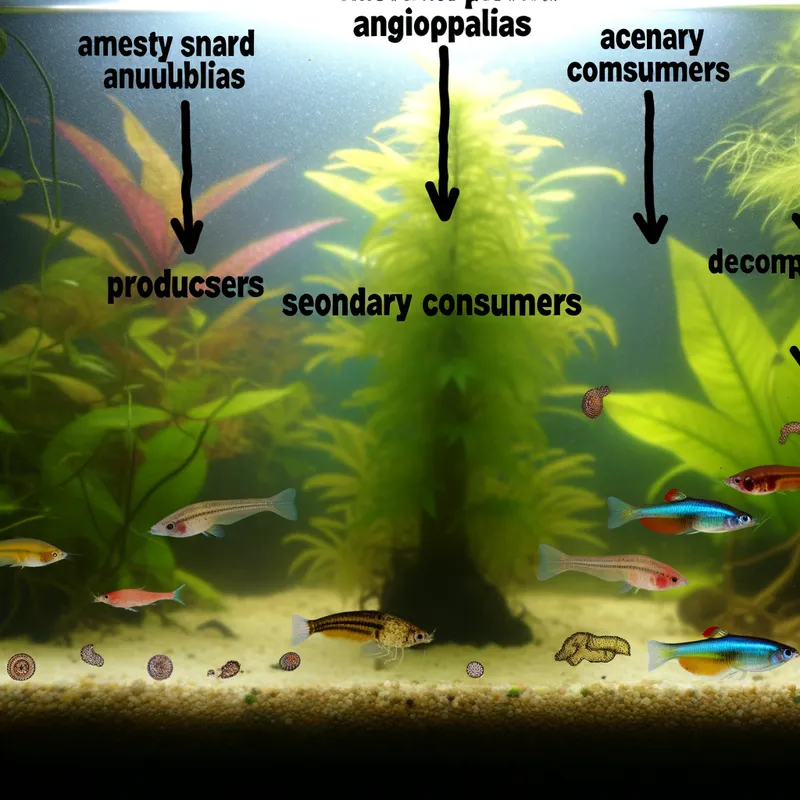
Freshwater Food Web - AI Generated Image with Art

Freshwater Food Web - Title: Freshwater Aquarium Food Chain

Layout:
	•	Background: A realistic freshwater aquarium scene with natural lighting. The substrate is visible, showing fine gravel and bits of decomposing plant material, hinting at a bustling microbial world.
	•	Foreground Layers: Arranged in clearly defined horizontal tiers from bottom to top, each labeled with its role in the ecosystem.

Layer 1: Producers (Angiosperms)
	•	Visuals: Lush, vibrant aquarium plants such as Amazon Sword and Anubias, depicted at the bottom of the image.
	•	Label: “Producers (Angiosperms)”
	•	Note: Emphasize that there are no gymnosperms present.

Layer 2: Primary Consumers
	•	Components:
	•	Mystery Snails – Shown nibbling on algae and decaying plant matter.
	•	Amano Shrimp & Cherry Shrimp – Depicted actively cleaning surfaces and feeding on biofilm.
	•	Corydoras – Illustrated as bottom-dwelling fish scavenging for leftover food.
	•	Label: “Primary Consumers”
	•	Arrows: Draw arrows upward from the plants to these creatures, indicating they derive nutrients from the producers.

Layer 3: Secondary Consumers (Regular Predators)
	•	Component:
	•	Neon Tetras – Displayed in a small school, gently preying on micro-invertebrates or smaller particles.
	•	Label: “Secondary Consumers”
	•	Arrows: Connect the primary consumers to the neon tetras.

Layer 4: Apex Predators
	•	Component:
	•	Two Female Betta Fish – Positioned at the top of the diagram, depicted as the dominant figures.
	•	Label: “Apex Predators”
	•	Arrows: Indicate that the bettas are at the top of the food chain with arrows coming down from them to the neon tetras and other smaller organisms.

Additional Element:
	•	Decomposers (Bacteria & Fungi):
	•	Visuals: Represented subtly near the substrate with a creative touch (perhaps with a faint glow or abstract microscopic imagery) to indicate their role in breaking down waste and recycling nutrients.
	•	Label: “Decomposers (Bacteria & Fungi)”
	•	Arrows: Small arrows from decomposers back to the plants to illustrate the nutrient cycle.

Artistic Style:
	•	A blend of scientific clarity with an artistic, vibrant underwater scene.
	•	Clear, legible labels and arrows that neatly illustrate the food chain.
	•	Realistic depictions of each species with accurate colors and textures.
	•	The overall image should be balanced, with each tier easily distinguishable and the relationships between organisms visually clear.

Make this into a highly detailed food chain image - AI image generated with Art

Freshwater Food Web

Title: Freshwater Aquarium Food Chain Layout: • Background: A realistic freshwater aquarium scene with natural lighting. The substrate is visible, showing fine gravel and bits of decomposing plant material, hinting at a bustling microbial world. • Foreground Layers: Arranged in clearly defined horizontal tiers from bottom to top, each labeled with its role in the ecosystem. Layer 1: Producers (Angiosperms) • Visuals: Lush, vibrant aquarium plants such as Amazon Sword and Anubias, depicted at the bottom of the image. • Label: “Producers (Angiosperms)” • Note: Emphasize that there are no gymnosperms present. Layer 2: Primary Consumers • Components: • Mystery Snails – Shown nibbling on algae and decaying plant matter. • Amano Shrimp & Cherry Shrimp – Depicted actively cleaning surfaces and feeding on biofilm. • Corydoras – Illustrated as bottom-dwelling fish scavenging for leftover food. • Label: “Primary Consumers” • Arrows: Draw arrows upward from the plants to these creatures, indicating they derive nutrients from the producers. Layer 3: Secondary Consumers (Regular Predators) • Component: • Neon Tetras – Displayed in a small school, gently preying on micro-invertebrates or smaller particles. • Label: “Secondary Consumers” • Arrows: Connect the primary consumers to the neon tetras. Layer 4: Apex Predators • Component: • Two Female Betta Fish – Positioned at the top of the diagram, depicted as the dominant figures. • Label: “Apex Predators” • Arrows: Indicate that the bettas are at the top of the food chain with arrows coming down from them to the neon tetras and other smaller organisms. Additional Element: • Decomposers (Bacteria & Fungi): • Visuals: Represented subtly near the substrate with a creative touch (perhaps with a faint glow or abstract microscopic imagery) to indicate their role in breaking down waste and recycling nutrients. • Label: “Decomposers (Bacteria & Fungi)” • Arrows: Small arrows from decomposers back to the plants to illustrate the nutrient cycle. Artistic Style: • A blend of scientific clarity with an artistic, vibrant underwater scene. • Clear, legible labels and arrows that neatly illustrate the food chain. • Realistic depictions of each species with accurate colors and textures. • The overall image should be balanced, with each tier easily distinguishable and the relationships between organisms visually clear. Make this into a highly detailed food chain image

Art, Size: 1024 x 1024
 2 Likes
 14 Views
⭐⭐⭐⭐⭐

Fantastic client support!

Even before I paid a dime, I received immediate responses to all my emails! I never hear back from big corporations, if you don't count the robotic emails, that is. Tangra's team has been super responsive, helpful, and actually human. :)

Similar AI-Generated Images

Discover more images created with similar styles, themes, and AI models


Frequently Asked Questions

Can I use the AI-generated images commercially?

Yes. All images created with Tangra AI are copyright-free and fully approved for commercial use, with no attribution required.

What AI models are used to create these images?

Tangra AI uses a curated mix of the best-performing industry models like Flux, DALL·E, Imagen, Nano Banana, and Stable Diffusion alongside our own proprietary models to deliver consistently high-quality, production-ready images.

Can I edit the images after they are generated?

Yes. Tangra AI includes powerful editing tools that let you refine and adjust your images after they're generated.