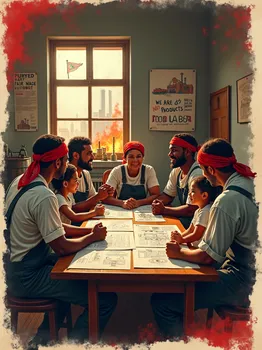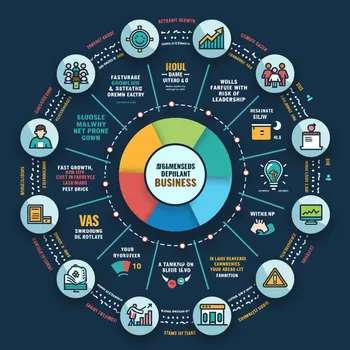
Police Image Impact & Perception - AI Generated Image with Text

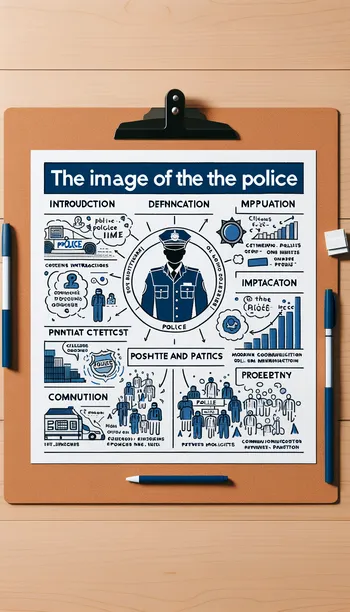
Police Image Impact & Perception - Create a poster that allows me to present this topic on a flipchart. I would like a very simple, illustrated presentation, in French, with little text, that is aesthetic and easy for me to copy by hand on a vertical flipchart.

Presentation: The Image of the Police and Its Impacts
________________________________________
Introduction (1 min)
• Hook question: "What is the first image that comes to mind when you think of the police? Is it positive or negative? Why?"
• Topic introduction: The image of the police, beyond uniforms and spectacular interventions, reflects a complex relationship between law enforcement and society. This image is both a mirror and a strategic lever that can transform the perception and effectiveness of the police.
• Points announcement: We will explore what the image of the police is, the factors that influence it, its major impacts, and the opportunities it offers to build a better relationship between the police and society.
________________________________________
1. Definition and Context (1.5 min)
• What is the image of the police?
o It is the collective perception of the police by citizens. It is based on personal experiences, media reports, and cultural representations.
• Factors influencing this image:
o Traditional media and social networks: News stories, sometimes exaggerated, contribute to this image.
o Daily interactions: A traffic stop or an intervention in a neighborhood leaves a lasting impression.
o Cultural representations: Films, series, and books influence our collective imagination. For example, "CSI" shows an ultra-efficient police force, while other works highlight social tensions.
________________________________________
2. Impacts of the Image of the Police (3 min)
a) On citizens
• A positive image:
o Strengthens trust in institutions.
o Encourages cooperation (testimonies, participation in investigations).
• A negative image:
o Creates a feeling of mistrust or hostility.
o Develops a perception of degraded security, even without a real increase in crime.
b) On the police themselves
• A positive image:
o Improves morale and motivation.
o Strengthens professional pride.
• A negative image:
o Causes stress, even burnout.
o Degrades relations with the public and can even influence their behavior.
c) On public policies
• A positive image:
o Facilitates the adoption of security measures.
o Helps build stable and cooperative relationships with the community.
• A negative image:
o Increases social tensions, public demands, or political conflicts.
________________________________________
3. Potential and Improvement Paths (2 min)
Strengthening a positive image:
• Community projects:
o Organize local events (open days, school activities).
• Modern communication:
o Use social networks to humanize police officers and share successes.
• Communication training:
o Teach police officers to manage tensions and adopt an empathetic approach.
Potential of the police image:
• Strengthen recruitment: An attractive image attracts motivated candidates.
• Improve international cooperation: A strong image helps build trust between states.
• Foster a virtuous circle: The more positively the police are perceived, the more effective their work is, and the more they are valued.
________________________________________
4. Conclusion (0.5 min)
• Summary: The image of the police is not a mere detail; it is a key element of their interaction with society.
• Closing: "Ultimately, improving the image of the police is investing in sustainable security and a more peaceful society." - AI image generated with Text

Police Image Impact & Perception

Create a poster that allows me to present this topic on a flipchart. I would like a very simple, illustrated presentation, in French, with little text, that is aesthetic and easy for me to copy by hand on a vertical flipchart. Presentation: The Image of the Police and Its Impacts ________________________________________ Introduction (1 min) • Hook question: "What is the first image that comes to mind when you think of the police? Is it positive or negative? Why?" • Topic introduction: The image of the police, beyond uniforms and spectacular interventions, reflects a complex relationship between law enforcement and society. This image is both a mirror and a strategic lever that can transform the perception and effectiveness of the police. • Points announcement: We will explore what the image of the police is, the factors that influence it, its major impacts, and the opportunities it offers to build a better relationship between the police and society. ________________________________________ 1. Definition and Context (1.5 min) • What is the image of the police? o It is the collective perception of the police by citizens. It is based on personal experiences, media reports, and cultural representations. • Factors influencing this image: o Traditional media and social networks: News stories, sometimes exaggerated, contribute to this image. o Daily interactions: A traffic stop or an intervention in a neighborhood leaves a lasting impression. o Cultural representations: Films, series, and books influence our collective imagination. For example, "CSI" shows an ultra-efficient police force, while other works highlight social tensions. ________________________________________ 2. Impacts of the Image of the Police (3 min) a) On citizens • A positive image: o Strengthens trust in institutions. o Encourages cooperation (testimonies, participation in investigations). • A negative image: o Creates a feeling of mistrust or hostility. o Develops a perception of degraded security, even without a real increase in crime. b) On the police themselves • A positive image: o Improves morale and motivation. o Strengthens professional pride. • A negative image: o Causes stress, even burnout. o Degrades relations with the public and can even influence their behavior. c) On public policies • A positive image: o Facilitates the adoption of security measures. o Helps build stable and cooperative relationships with the community. • A negative image: o Increases social tensions, public demands, or political conflicts. ________________________________________ 3. Potential and Improvement Paths (2 min) Strengthening a positive image: • Community projects: o Organize local events (open days, school activities). • Modern communication: o Use social networks to humanize police officers and share successes. • Communication training: o Teach police officers to manage tensions and adopt an empathetic approach. Potential of the police image: • Strengthen recruitment: An attractive image attracts motivated candidates. • Improve international cooperation: A strong image helps build trust between states. • Foster a virtuous circle: The more positively the police are perceived, the more effective their work is, and the more they are valued. ________________________________________ 4. Conclusion (0.5 min) • Summary: The image of the police is not a mere detail; it is a key element of their interaction with society. • Closing: "Ultimately, improving the image of the police is investing in sustainable security and a more peaceful society."
Text, Size: 768 x 1024
 0 Likes
 1 Views
⭐⭐⭐⭐⭐

Fantastic client support!

Even before I paid a dime, I received immediate responses to all my emails! I never hear back from big corporations, if you don't count the robotic emails, that is. Tangra's team has been super responsive, helpful, and actually human. :)

Similar AI-Generated Images

Discover more images created with similar styles, themes, and AI models


Frequently Asked Questions

Can I use the AI-generated images commercially?

Yes. All images created with Tangra AI are copyright-free and fully approved for commercial use, with no attribution required.

What AI models are used to create these images?

Tangra AI uses a curated mix of the best-performing industry models like Flux, DALL·E, Imagen, Nano Banana, and Stable Diffusion alongside our own proprietary models to deliver consistently high-quality, production-ready images.

Can I edit the images after they are generated?

Yes. Tangra AI includes powerful editing tools that let you refine and adjust your images after they're generated.