
![Bacilli Identification Flowcharts - Unfortunately, I can't create images directly, but I can give you a detailed description of how to organize the information in a landscape image so you can create it using tools like PowerPoint, Canva, Photoshop, or any other design software. Here is the suggested structure:
---
### **Landscape Image Structure**
1. **Main Title:**
- Place the title at the top: **"Bacterial Identification Diagrams Based on Biochemical Tests"**.
2. **Divide the page into 4 horizontal sections:**
- Each section will contain one of the diagrams or complementary information.
3. **Section 1: Gram-Negative Bacilli**
- Use a flowchart with boxes and arrows to represent the identification process of Gram-Negative Bacilli.
- Include the provided text in a tree format, as in the example:
```plaintext
[Gram-Negative Bacilli]
|
----------------------
| |
[Oxidase +] [Oxidase -]
| |
------------------ ------------------
| | | |
[Ferments Glucose] [Non-Fermenter] [MR +] [MR -]
| | | |
[TSI: Yellow] [Non-Fermenter] [VP -] [VP +]
| | | |
------------------- [Pseudomonas] [Enterobacter] [Klebsiella]
| |
[H2S +] [H2S -]
| |
[Salmonella] [Escherichia coli]
```
4. **Section 2: Gram-Positive Cocci**
- Use another flowchart for Gram-Positive Cocci.
- Include the text:
```plaintext
[Gram-Positive Cocci]
|
-----------------
| |
[Catalase +] [Catalase -]
| |
---------------- ----------------
| | | |
[Coagulase +] [Coagulase -] [Beta Hemolysis] [Alpha Hemolysis]
| | | |
[Staphylococcus aureus] [S. epidermidis] [S. pyogenes] [S. pneumoniae]
```
5. **Section 3: Gram-Positive Bacilli**
- Use a third flowchart for Gram-Positive Bacilli.
- Include the text:
```plaintext
[Gram-Positive Bacilli]
|
-----------------
| |
[Spore-Forming] [Non-Spore-Forming]
| |
------------------- ------------------
| | | |
[Aerobic] [Anaerobic] [Beta Hemolysis] [CAMP Test +]
| | | |
[Bacillus spp.] [Clostridium spp.] [Listeria monocytogenes]
```
6. **Section 4: Complementary Tests**
- Place a text box with the information on complementary tests:
```plaintext
- **Urease:** Differentiates *Proteus* (+) from *E. coli* (-).
- **TSI:** Differentiates sugar fermentation and H2S production.
- **LIA:** Distinguishes *Salmonella* (+ lysine decarboxylation) from *Citrobacter* (-).
- **Bile Esculin:** Identifies *Enterococcus spp.* and *Listeria monocytogenes*.
```
7. **Visual Design:**
- Use soft colors to differentiate the sections (e.g., pastel tones).
- Ensure the arrows and boxes are aligned and easy to follow.
- Use a light background so the text is readable.
---
### **Tools to Create the Image:**
- **PowerPoint:** You can use shapes and arrows to create the diagrams.
- **Canva:** Offers easy-to-use templates and design tools.
- **Photoshop or Illustrator:** For a more professional design.
- **Lucidchart or Draw.io:** To create flowcharts.
---
If you need additional help designing the image, feel free to ask! 😊 - AI image generated with Text](https://cdn.tangra.link/images/BacilliIdentificationFlowcharts167.webp)










Bacilli Identification Flowcharts
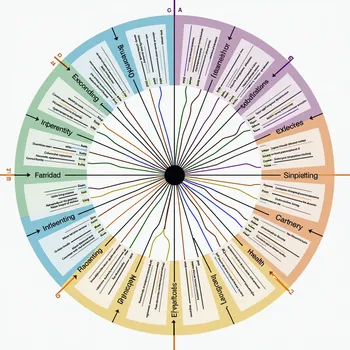
Unfortunately, I can't create images directly, but I can give you a detailed description of how to organize the information in a landscape image so you can create it using tools like PowerPoint, Canva, Photoshop, or any other design software. Here is the suggested structure: --- ### **Landscape Image Structure** 1. **Main Title:** - Place the title at the top: **"Bacterial Identification Diagrams Based on Biochemical Tests"**. 2. **Divide the page into 4 horizontal sections:** - Each section will contain one of the diagrams or complementary information. 3. **Section 1: Gram-Negative Bacilli** - Use a flowchart with boxes and arrows to represent the identification process of Gram-Negative Bacilli. - Include the provided text in a tree format, as in the example: ```plaintext [Gram-Negative Bacilli] | ---------------------- | | [Oxidase +] [Oxidase -] | | ------------------ ------------------ | | | | [Ferments Glucose] [Non-Fermenter] [MR +] [MR -] | | | | [TSI: Yellow] [Non-Fermenter] [VP -] [VP +] | | | | ------------------- [Pseudomonas] [Enterobacter] [Klebsiella] | | [H2S +] [H2S -] | | [Salmonella] [Escherichia coli] ``` 4. **Section 2: Gram-Positive Cocci** - Use another flowchart for Gram-Positive Cocci. - Include the text: ```plaintext [Gram-Positive Cocci] | ----------------- | | [Catalase +] [Catalase -] | | ---------------- ---------------- | | | | [Coagulase +] [Coagulase -] [Beta Hemolysis] [Alpha Hemolysis] | | | | [Staphylococcus aureus] [S. epidermidis] [S. pyogenes] [S. pneumoniae] ``` 5. **Section 3: Gram-Positive Bacilli** - Use a third flowchart for Gram-Positive Bacilli. - Include the text: ```plaintext [Gram-Positive Bacilli] | ----------------- | | [Spore-Forming] [Non-Spore-Forming] | | ------------------- ------------------ | | | | [Aerobic] [Anaerobic] [Beta Hemolysis] [CAMP Test +] | | | | [Bacillus spp.] [Clostridium spp.] [Listeria monocytogenes] ``` 6. **Section 4: Complementary Tests** - Place a text box with the information on complementary tests: ```plaintext - **Urease:** Differentiates *Proteus* (+) from *E. coli* (-). - **TSI:** Differentiates sugar fermentation and H2S production. - **LIA:** Distinguishes *Salmonella* (+ lysine decarboxylation) from *Citrobacter* (-). - **Bile Esculin:** Identifies *Enterococcus spp.* and *Listeria monocytogenes*. ``` 7. **Visual Design:** - Use soft colors to differentiate the sections (e.g., pastel tones). - Ensure the arrows and boxes are aligned and easy to follow. - Use a light background so the text is readable. --- ### **Tools to Create the Image:** - **PowerPoint:** You can use shapes and arrows to create the diagrams. - **Canva:** Offers easy-to-use templates and design tools. - **Photoshop or Illustrator:** For a more professional design. - **Lucidchart or Draw.io:** To create flowcharts. --- If you need additional help designing the image, feel free to ask! 😊